
Hollow vs solid concrete blocks: which one should you use?
Both are excellent — for different jobs. Choosing wrong either overloads your structure or weakens your wall.
Choose solid blocks when
- The wall carries roof or floor loads
- You are building boundary or compound walls
- You need fixings for heavy gates, grills or equipment
- The wall faces impact (parking, loading areas)
Choose hollow blocks when
- Building partition or infill walls in an RCC frame
- You want to reduce dead load on beams and foundations
- Thermal insulation matters (top floors, sheds)
- You need to run reinforcement or conduits through the wall
What to check on any block
Concrete masonry blocks in India are covered by IS 2185 (Part 1). Ask for compressive strength, density and dimensional tolerance. Accurate blocks mean thinner joints and less plaster — that saving often covers the price difference.
The most common mistake we see
Soaking concrete blocks in water before laying, like clay bricks. It causes shrinkage cracks later.
Frequently asked
- Are concrete blocks better than red bricks?
- For most modern construction, yes: larger size means faster laying, fewer joints, less mortar and more consistent strength.
Products that solve this
 Blocks
Solid Block
Strong solid concrete for walls & boundaries
Expert tip: Never lay blocks wet from the curing yard or soaked like clay bricks. Concrete blocks shrink as they dry — lay them surface-dry to avoid wall cracks.
- Thickness
- 100 / 150 / 200 mm widths
- Finish
- Fair-faced
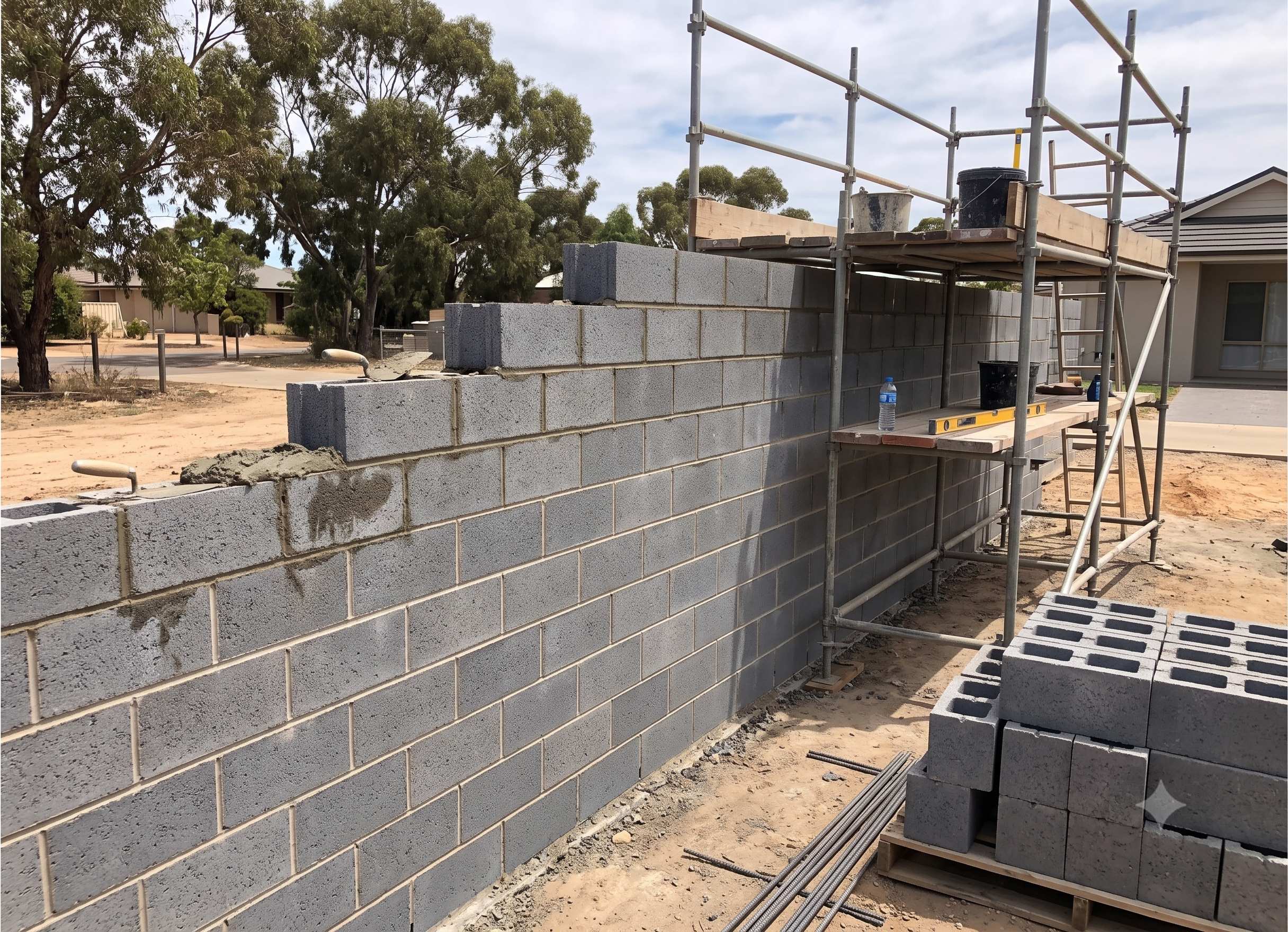 Blocks
Hollow Block
Lightweight, efficient masonry unit
Expert tip: Apply mortar only to the face shells, not across the webs. It saves mortar and stops moisture bridging through the wall.
- Thickness
- 100 / 150 / 200 mm widths
- Finish
- Fair-faced