
Why pavers shift, rock and open up gaps
If pavers rock underfoot or joints keep widening, the system isn’t locked. Interlocking only works when three things are in place.
Signs you have this problem
- Pavers rocking or clicking when stepped on
- Gaps widening along the edges
- Pattern “creeping” at turning points
- Edge pavers tilting outward
1. No edge restraint
Paving behaves like a box of tightly packed blocks — it needs walls. Kerb stones bedded and haunched in concrete hold the whole surface in. Without them, every vehicle pushes the edge outward a little.
2. Empty joints
Joint sand is what transfers load between blocks. Sweep fine, dry sand into the joints, plate-compact, and repeat until full. Top up after the first monsoon.
3. Wrong laying pattern
For driveways and roads, a 45° or 90° herringbone resists braking and turning forces best. Stretcher bond running in the direction of traffic tends to creep.
The most common mistake we see
Filling joints with cement. It cracks, traps water and makes future repairs nearly impossible.
Frequently asked
- What sand should go in the joints?
- Clean, dry, fine sand that flows freely. Wet or clayey sand bridges in the joint and never fills it properly.
Products that solve this
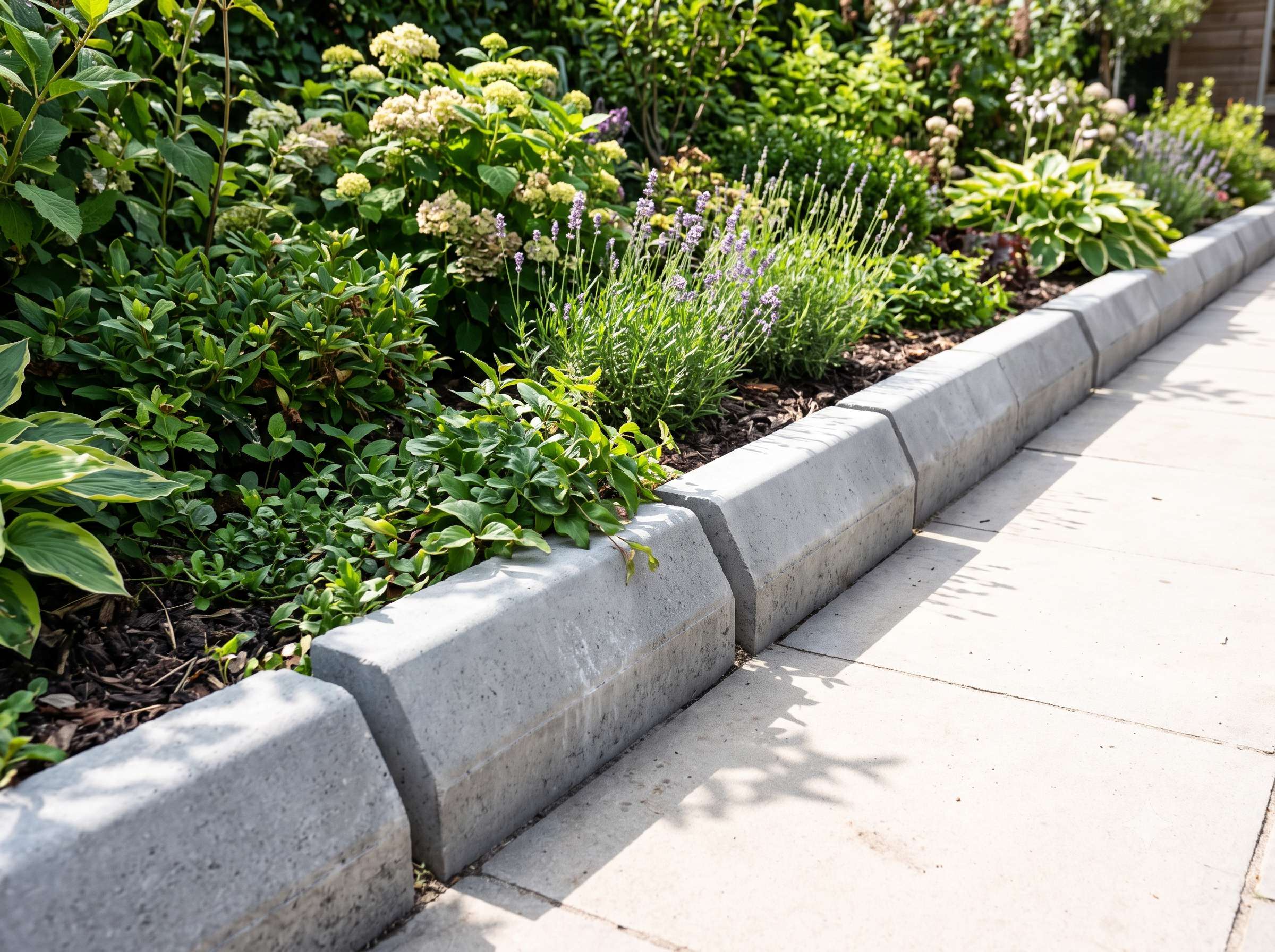 Kerbs & Drainage
Kerb Stones
Granite-finish edge restraint
Expert tip: Kerbs must be set on a concrete bed with a concrete haunch behind them. A kerb set on loose soil is decoration, not restraint.
- Thickness
- Full kerb & half kerb profiles
- Finish
- Granite finish
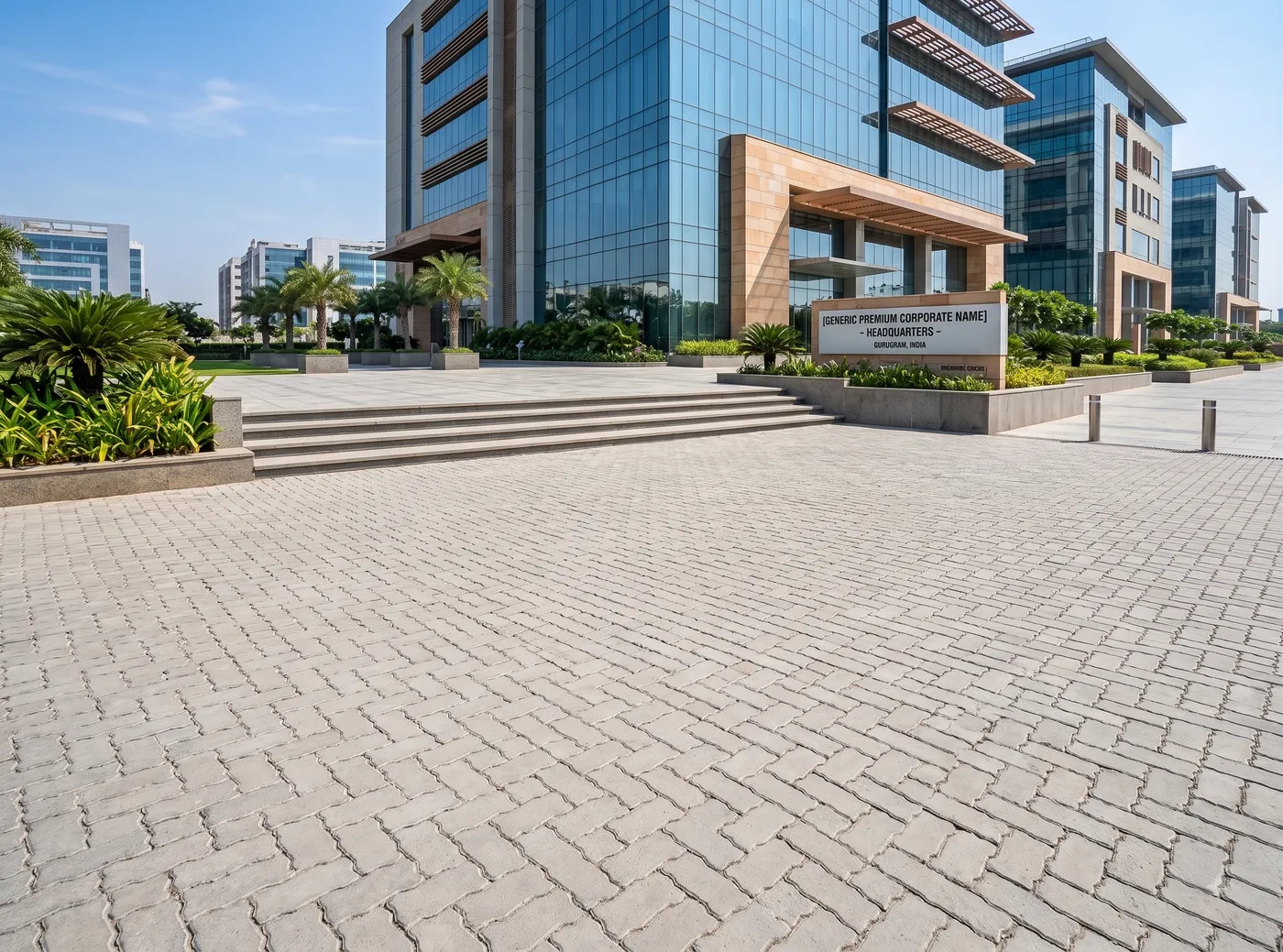 Pavers
Uni Pavers
Interlocking zig-zag for heavy loads
Expert tip: Interlock only works when joints are full. After laying, sweep in dry fine sand and plate-compact twice — empty joints are the #1 reason uni pavers rock.
- Thickness
- 80 mm / 100 mm / 120 mm
- Finish
- Plain grey or colour
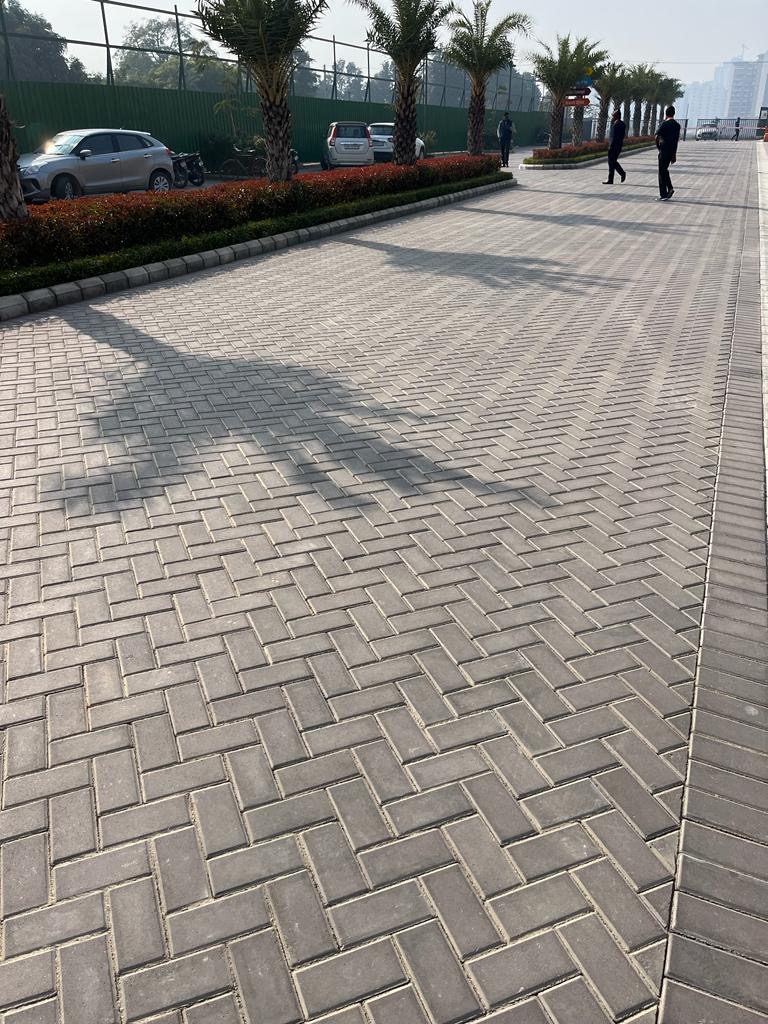 Pavers
Rectangular Pavers
Classic, versatile, easy to install
Expert tip: Where cars turn or brake, lay in a 45° herringbone. Stretcher bond in vehicle areas creeps over time; herringbone locks itself.
- Thickness
- 60 mm / 80 mm / 100 mm
- Finish
- Plain or colour