
Why the grass in your grass pavers keeps dying
Grass pavers look stunning when done right and sad when done wrong. The difference is almost always in the soil and the fill level.
Fill level is everything
The concrete ribs should carry the tyre, not the grass. Keep the soil 5–10 mm below the top of the paver so tyres roll on concrete.
Use the right soil
A mix of roughly 60% sand and 40% good topsoil drains well and resists compaction. Pure garden soil turns into a hard cake within a few months under car loads.
Match grass to use
- Daily parking in full shade: fill with pea gravel instead of grass.
- Occasional parking in sun: hardy local grasses establish well.
- Water regularly in the first 6–8 weeks; avoid parking during establishment.
The most common mistake we see
Laying grass pavers directly on soil without a compacted sub-base. The ribs sink and the grid breaks up.
Frequently asked
- Can grass pavers handle cars every day?
- Structurally, yes. Grass survival depends on sunlight and how long cars stand. For all-day parking, gravel-filled cells are a better choice.
Products that solve this
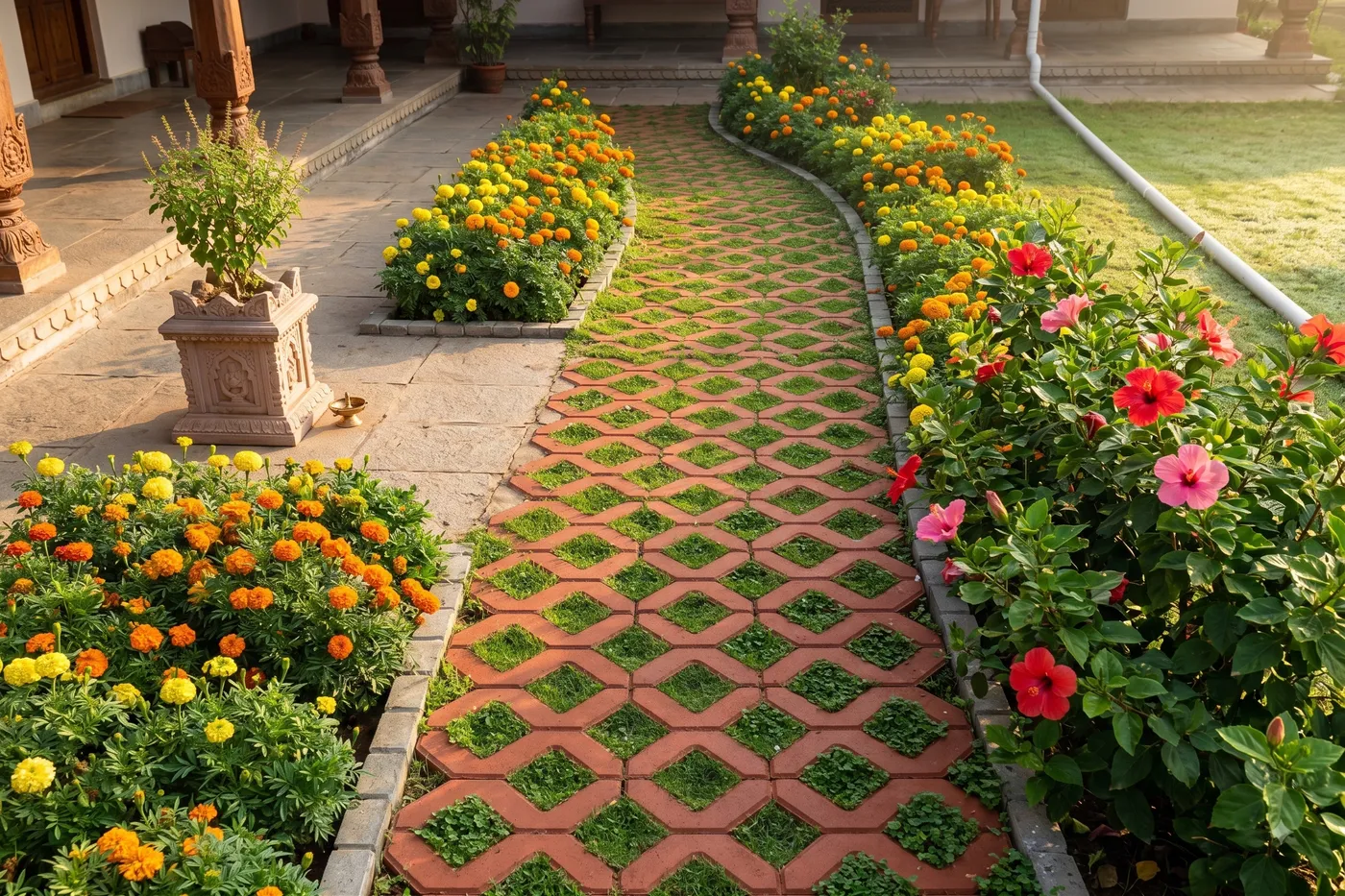 Pavers
Grass Pavers
Green parking that actually carries a car
Expert tip: Fill cells with a sandy topsoil mix and keep it 5–10 mm below the concrete rib. Overfilled cells get crushed by tyres and the grass dies within a season.
- Thickness
- 80 mm / 100 mm
- Finish
- Natural grey
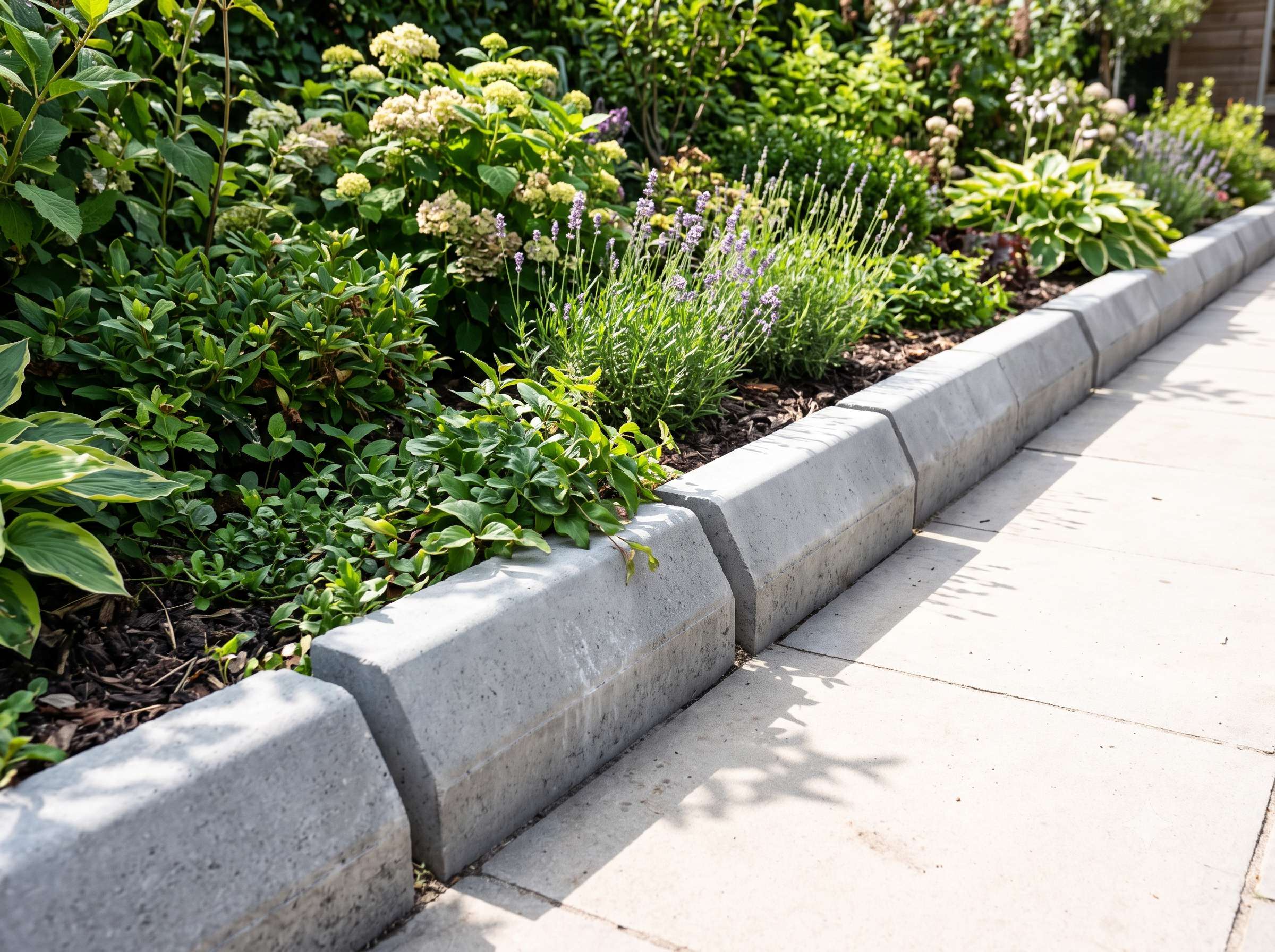 Kerbs & Drainage
Kerb Stones
Granite-finish edge restraint
Expert tip: Kerbs must be set on a concrete bed with a concrete haunch behind them. A kerb set on loose soil is decoration, not restraint.
- Thickness
- Full kerb & half kerb profiles
- Finish
- Granite finish