
Why pavers sink, dip or form ruts — and how to fix it for good
Sinking is almost never the paver’s fault. In nine out of ten site visits, the problem is what’s underneath.
Signs you have this problem
- Dips where car tyres usually stop
- Puddles that stay for hours after rain
- Ruts along the wheel path of a driveway
- Pavers near the edge dropping lower than the rest
The real cause: a weak sub-base
Pavers are a flexible surface. They don’t carry load on their own — they spread it into the layers beneath. If those layers were dumped and levelled instead of compacted, they keep settling for years.
For a home driveway, we recommend at least 150 mm of well-graded crushed stone (GSB/WMM) compacted in two layers. For roads, petrol pumps and industrial yards, 250 mm or more, designed by your engineer.
Too much bedding sand
The sand layer under pavers should be 25–40 mm, screeded flat. Contractors often use extra sand to “level” an uneven base. Thick sand moves under load, and that is exactly where your dips appear.
Water getting underneath
Water softens the base, especially on clayey soils common across Haryana and Punjab. Missing slopes, blocked drains and roof downpipes discharging onto paving are frequent culprits.
How to fix sunken pavers
- Lift the pavers in the affected area (they are reusable).
- Remove the bedding sand and inspect the base — if it’s soft, dig it out.
- Rebuild with crushed stone in 75–100 mm layers, compacting each with a plate compactor.
- Screed fresh sand to 25–40 mm, relay the pavers and compact.
- Sweep in dry joint sand and compact again.
The most common mistake we see
Topping up sunken areas with more sand. It looks fixed for a month, then sinks again — deeper.
Frequently asked
- Can I reuse my pavers after lifting them?
- Yes. Good-quality concrete pavers can be lifted and relaid multiple times. That is one of their biggest advantages over poured concrete or tiles.
- Will thicker pavers stop sinking?
- No. Thickness helps with load and breakage, but sinking is a base problem. An 80 mm paver on a bad base will sink just like a 60 mm one.
Products that solve this
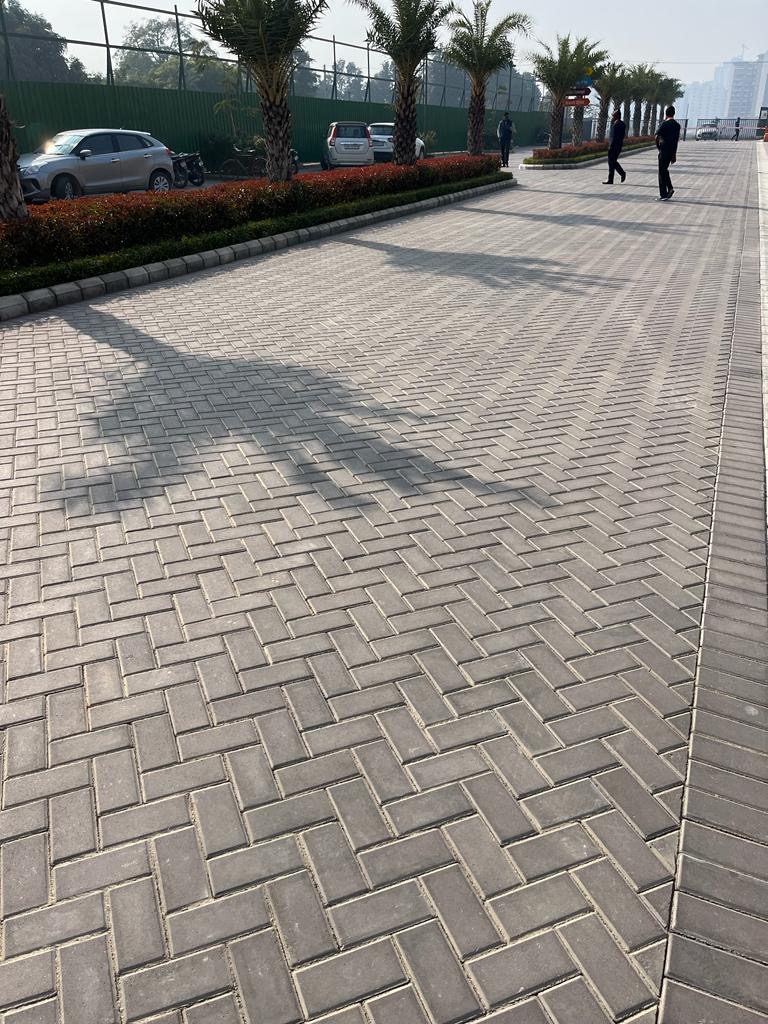 Pavers
Rectangular Pavers
Classic, versatile, easy to install
Expert tip: Where cars turn or brake, lay in a 45° herringbone. Stretcher bond in vehicle areas creeps over time; herringbone locks itself.
- Thickness
- 60 mm / 80 mm / 100 mm
- Finish
- Plain or colour
 Pavers
Uni Pavers
Interlocking zig-zag for heavy loads
Expert tip: Interlock only works when joints are full. After laying, sweep in dry fine sand and plate-compact twice — empty joints are the #1 reason uni pavers rock.
- Thickness
- 80 mm / 100 mm / 120 mm
- Finish
- Plain grey or colour
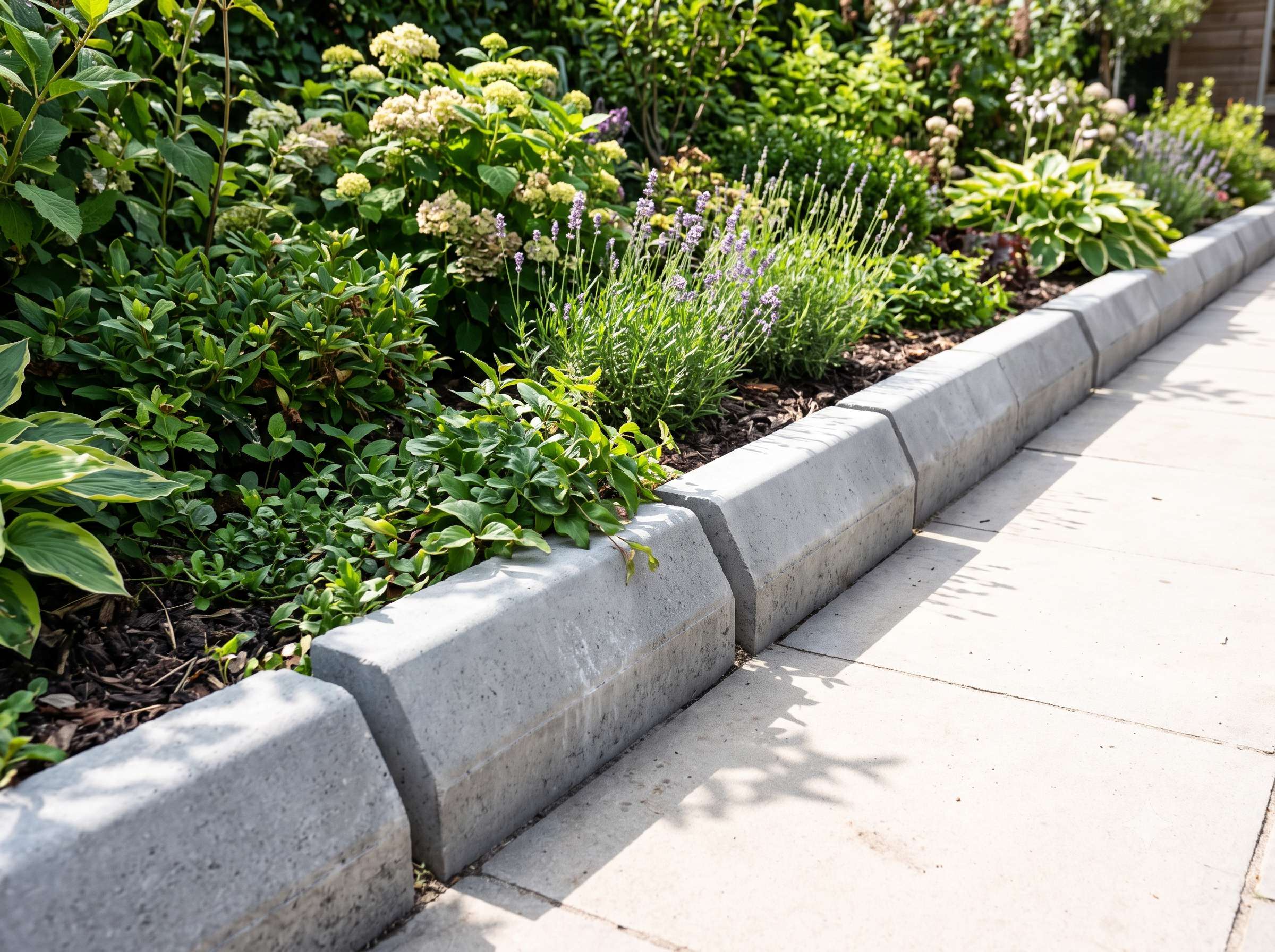 Kerbs & Drainage
Kerb Stones
Granite-finish edge restraint
Expert tip: Kerbs must be set on a concrete bed with a concrete haunch behind them. A kerb set on loose soil is decoration, not restraint.
- Thickness
- Full kerb & half kerb profiles
- Finish
- Granite finish